
The Grand Coulee Dam was a dream of dry land farmers in North Eastern Washington from 1916 onward. In 1933 construction was approved by the administration of FDR. Originally the dam was built to irrigate farmland. Today it is also the largest power plant in the United States.
Since many more Americans have been to Hoover Dam than Grand Coulee, a comparison. It took 3.25 million cubic yards to build the Hoover Dam, Grand Coulee 12 million cubic yards of concrete. The height of the Hoover Dam is 726 feet, Grand Coulee 550 feet. The width of the Hoover Dam is 726 feet, Grand Coulee 5,223 feet. The Hoover Dam can produce 4 billion kilowatts of power per year, the Grand Coulee 21 billion kilowatts.
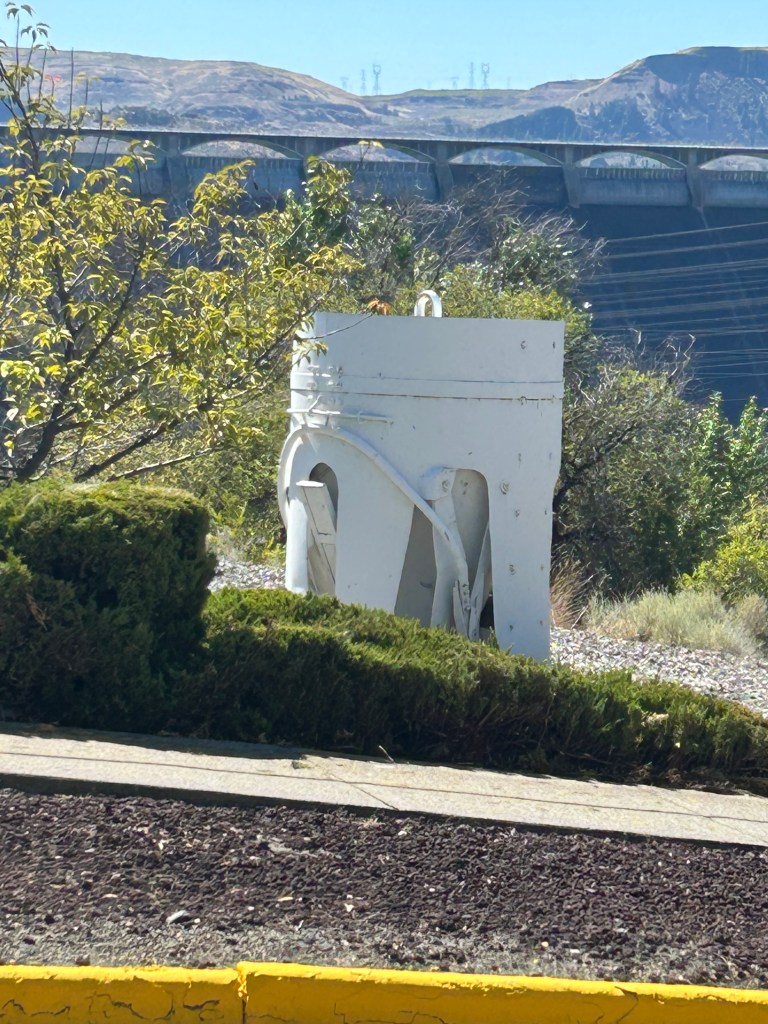
Concrete buckets, holding eight tons of concrete, were used to pour the concrete. Twelve million cubic yards were poured to construct the dam. So, 3,000,000 buckets were poured in the building of the dam.
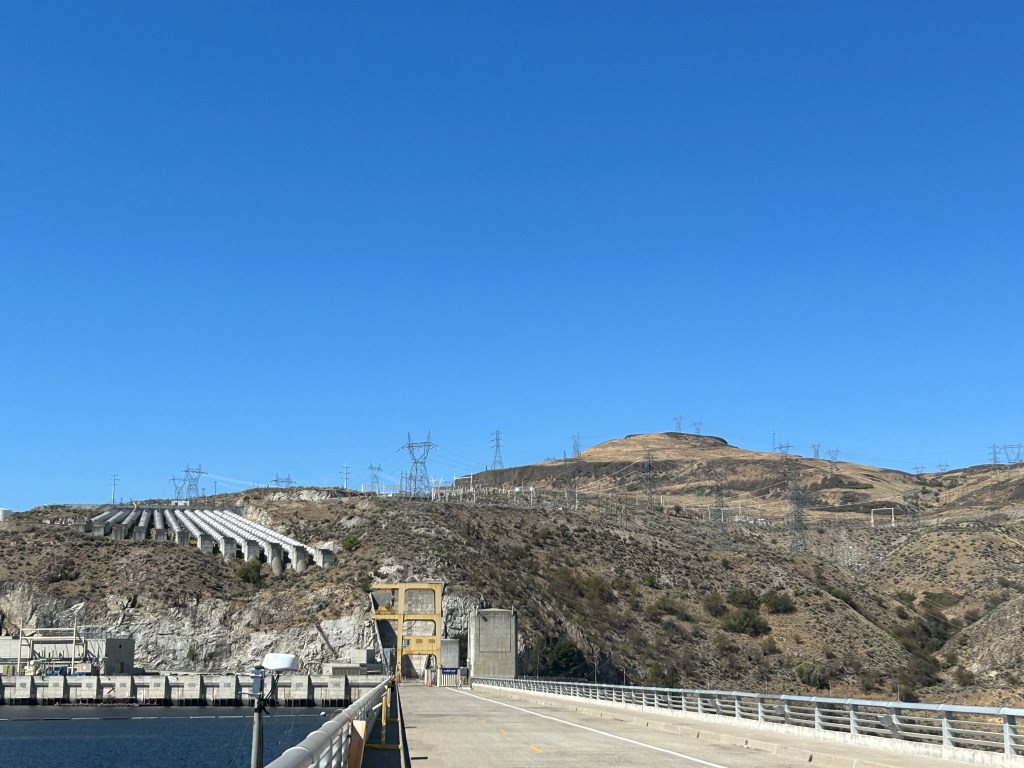
These hillside pipes are used to pump water up to the canals and reservoirs built to irrigate 670,000 thousand acres of land.
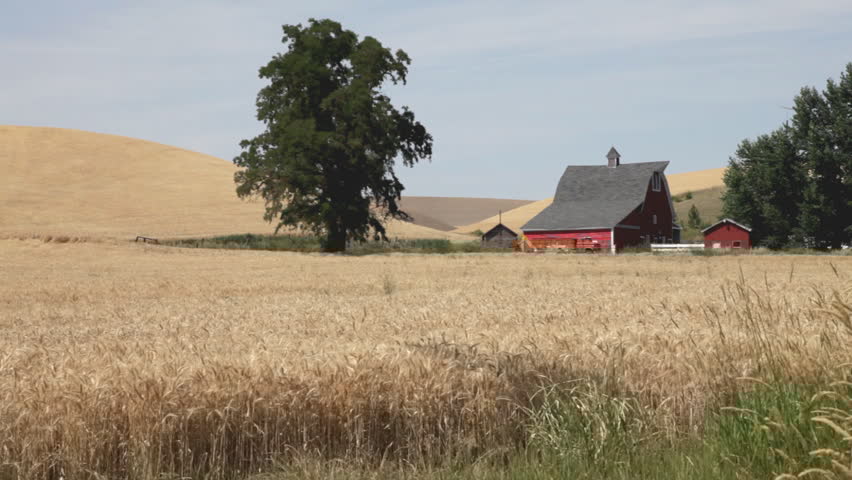
Different crops are grown on the irrigated land, but from what we could see Wheat dominates.
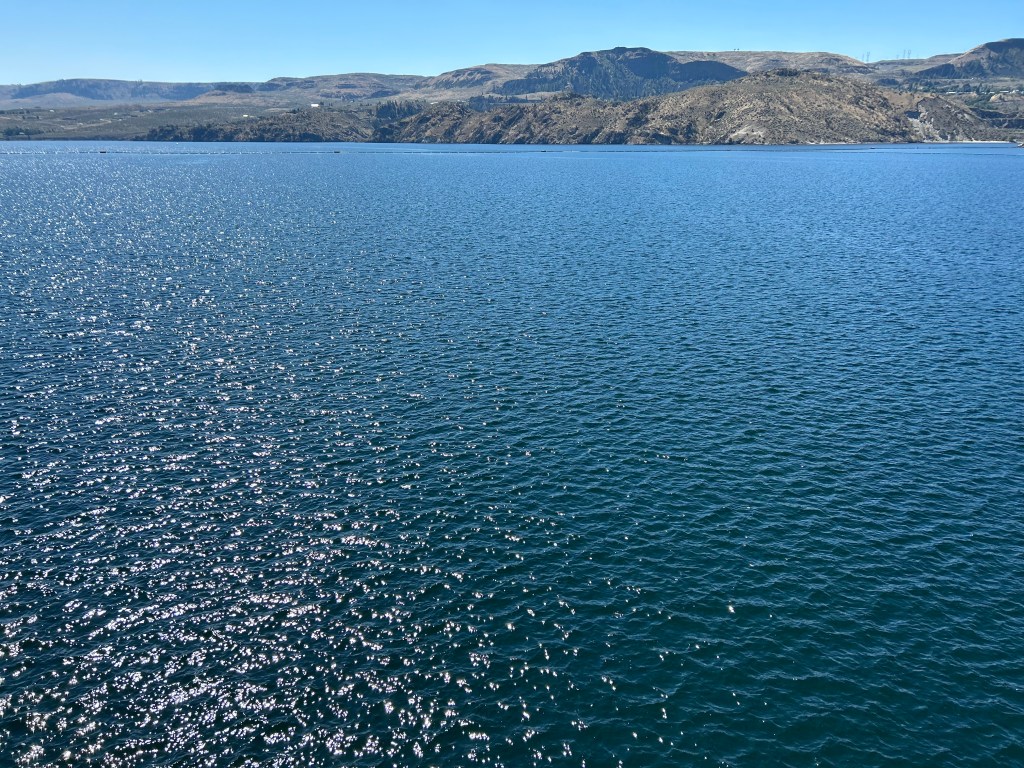
The reservoir created by the dam was named Lake Roosevelt. It is now a popular summer vacation destination.
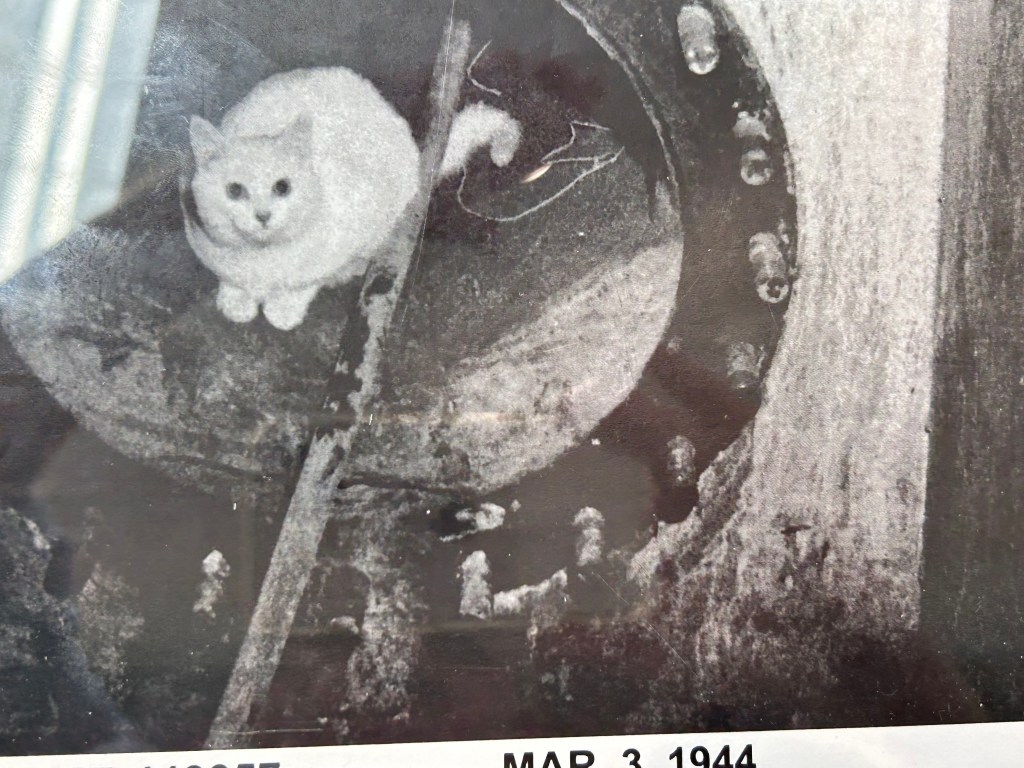
In 1942, nine years into construction, the Dam’s engineers faced a dilemma, how to run a cable through 500 feet of partially blocked, narrow, crocked drain pipe.
A white cat had been hanging around the construction site for several days. The cat did not complain when one of the engineers tied a string to it’s tail, nor did the cat complain when he tied the string to the cable. The cat then wandered into the pipe and found its way to the engineers calling for her at the other end. When the cat exited the pipe at the other end with the cable she was greeted with cheers and applause.
Apparently the Cat was never named or, if it was, its name was lost to posterity
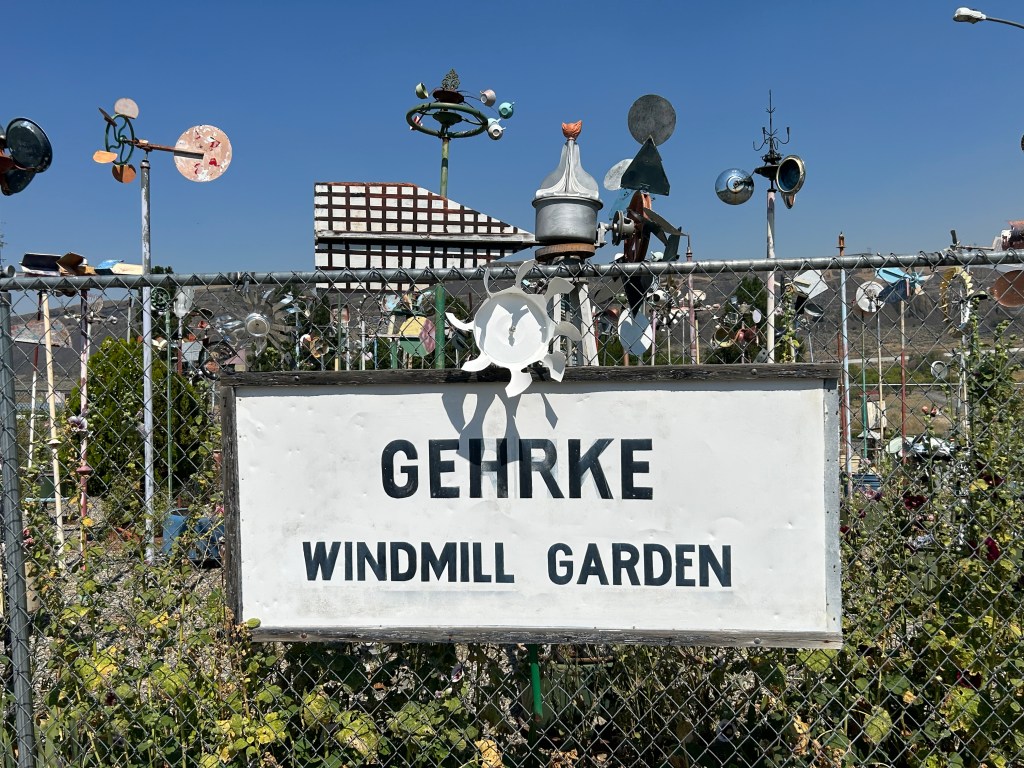
Emil Gehrke (1884 – 1979) began building windmills in 1965. He used items he found that had been thrown away. His wife Vera (1902 – 1980) painted the windmills. When Emil was asked why he created these windmills he responded, “I wanted to make something pretty for young people to see. We throw away too much. I like to show that almost any object can be reused”.
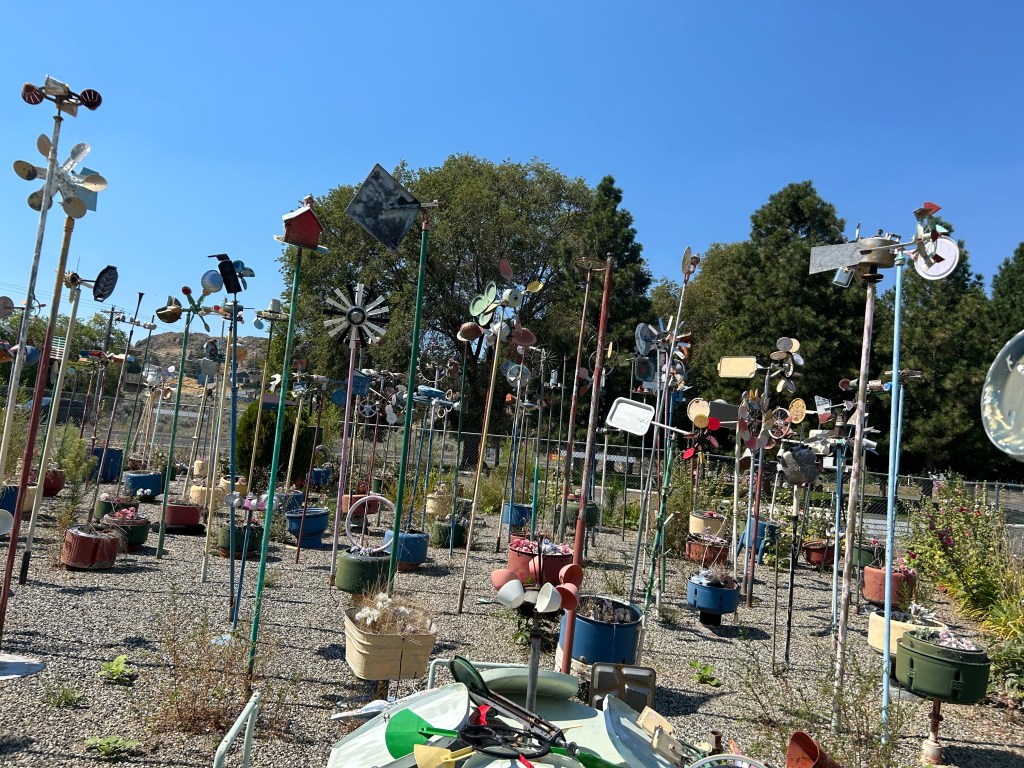
Emil and Vera created almost 800 windmills. Over 100 are displayed at this park in Grand Coulee. The rest are with friends, collectors and at the Washington Museum of Folk Art. The December ’75 issue of National Geographic featured a picture of Emil and Vera’s windmills in an article titled ‘Can we Harness the Wind?’.


 Wanderers in Wonder
Leave a reply to jdeluca2@comcast.net Cancel reply