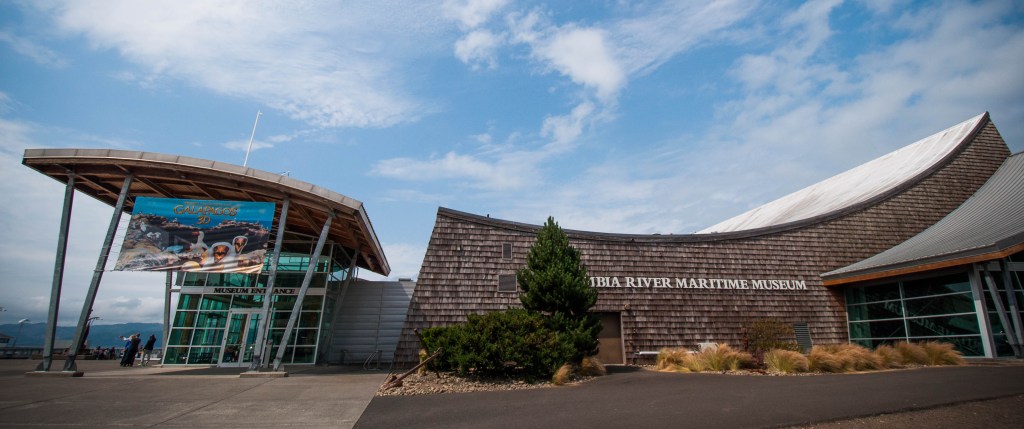
The Columbia River Maritime Museum in Astoria, Oregon

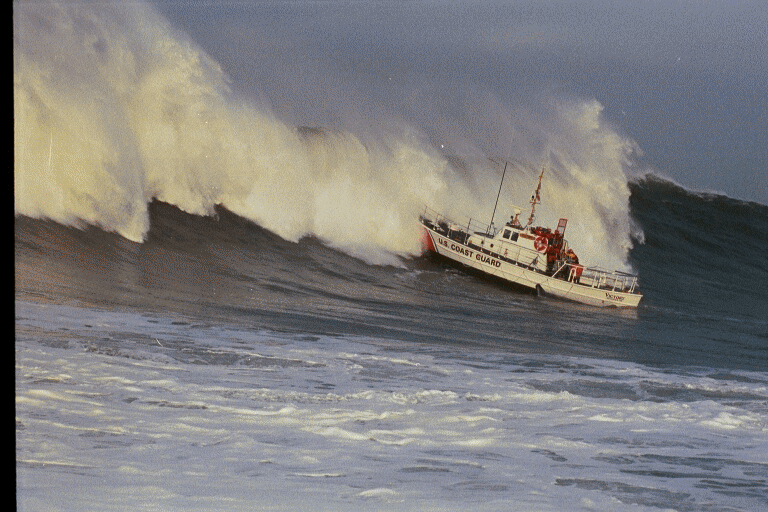
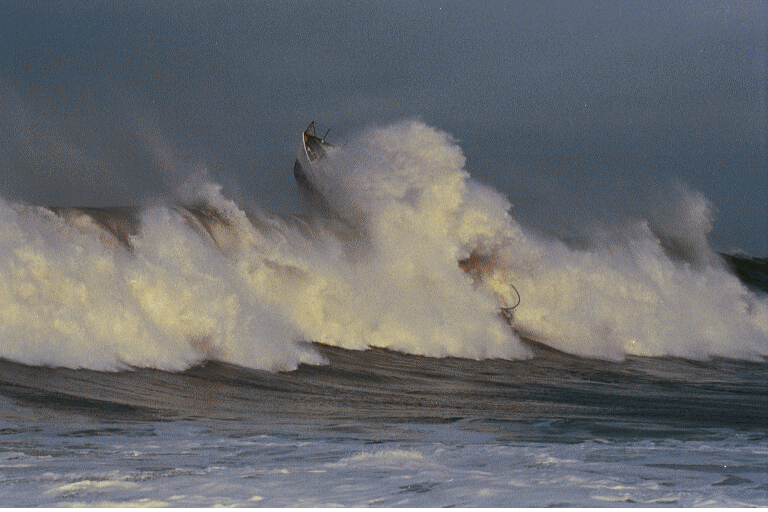
The ‘Columbia Bar’ (where the mighty Columbia River crashes into the Pacific) has been given the nickname, ‘The Graveyard of the Pacific’. Since Captain Gray ‘discovered’ the mouth of the Columbia in 1792 more than 2,000 shipwrecks have been recorded.
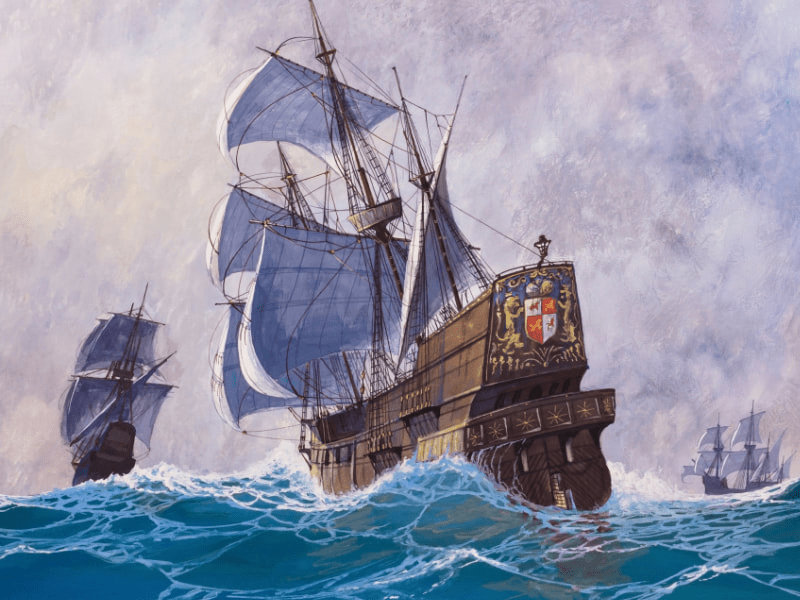
In 1693 the Spanish Galleon, San Cristo de Burgos, wrecked off the Oregon Coast. The galleon was carrying porcelain, Honey Bee Wax and other trade goods from the Far East to Spanish Colonies in the New World. Why it was so far off its course is, at this point, anyone’s guess. Nonetheless, from the 1800’s onward, settlers along the coast would find blocks of Honey Bee Wax with Spanish markings along the Oregon Coast.

A block of Honey Bee Wax. Why was Honey Bee Wax on board?

In the Catholic Church the Paschal Candle is lit on Easter Sunday and burns continually for forty days and forty nights until the resserected Christ ascends into heaven. This Ascension of the Christ to heaven is one of five Holy Days of Obligation in the Catholic calendar. The Paschal Candle, back in the day at least, had to be made of Honey Bee Wax. Honey Bees were not native to the New World. Hence the import of Honey Bee Wax to the Catholic communities of the Spanish colonies.
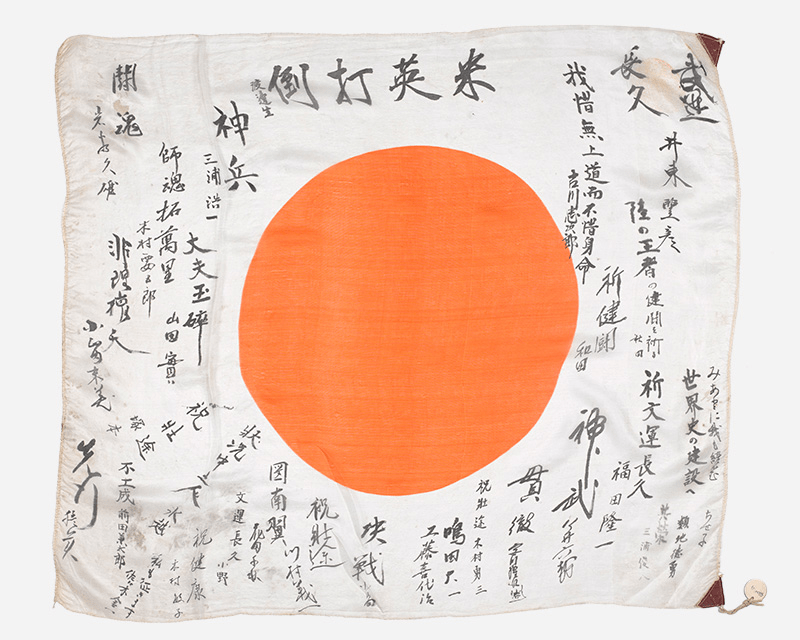
A ‘Yosegaki Hinomaru’, Japanese good luck flag. The families and friends of Japanese soldiers and sailors would make these good luck flags for Japanese soldiers and sailors to carry with them during times of war. The writings would contain personal messages to the soldiers and sailors to remind them of home and to send good wishes.

U. S. soldiers took these flags as souvenirs from their vanquished Japanese opponents during WWII.
In the early 2000’s a collector in Montreal came across a Yosegaki Hinomaru. He realized what he had. He and his son tracked down the Japanese family to whom the flag belonged.

The Japanese family of the soldier to whom this flag belonged last heard their soldier was fighting in Burma in 1943. A year later they received a box from the government containing a large stone. This meant their son was dead, no body to be returned. Receiving their soldier’s flag, from the hands of the Canadian collector (center standing) at their Tokyo home allowed them to finally bury their dead.
Since 2009 over 450 Yosegaki Hinomaru have been returned to families in Japan. There is a major display at the Maritime Museum about these flags sponsored by the OBON Society. The OBON Society was founded in Oregon in 2009 and is dedicated to peace through repatriation and not just of these Japanese flags but all items of personal value that have lost their way due to strife and conflict.
Peace…Wanderers in Wonder.
 Wanderers in Wonder
Leave a comment